
Bali Priest/Ceremonies

RuwatanA larger ceremony to release karmic burdens, on a day the priest chooses

Bayuh oton · Sapuh leger
Karmic cleansing

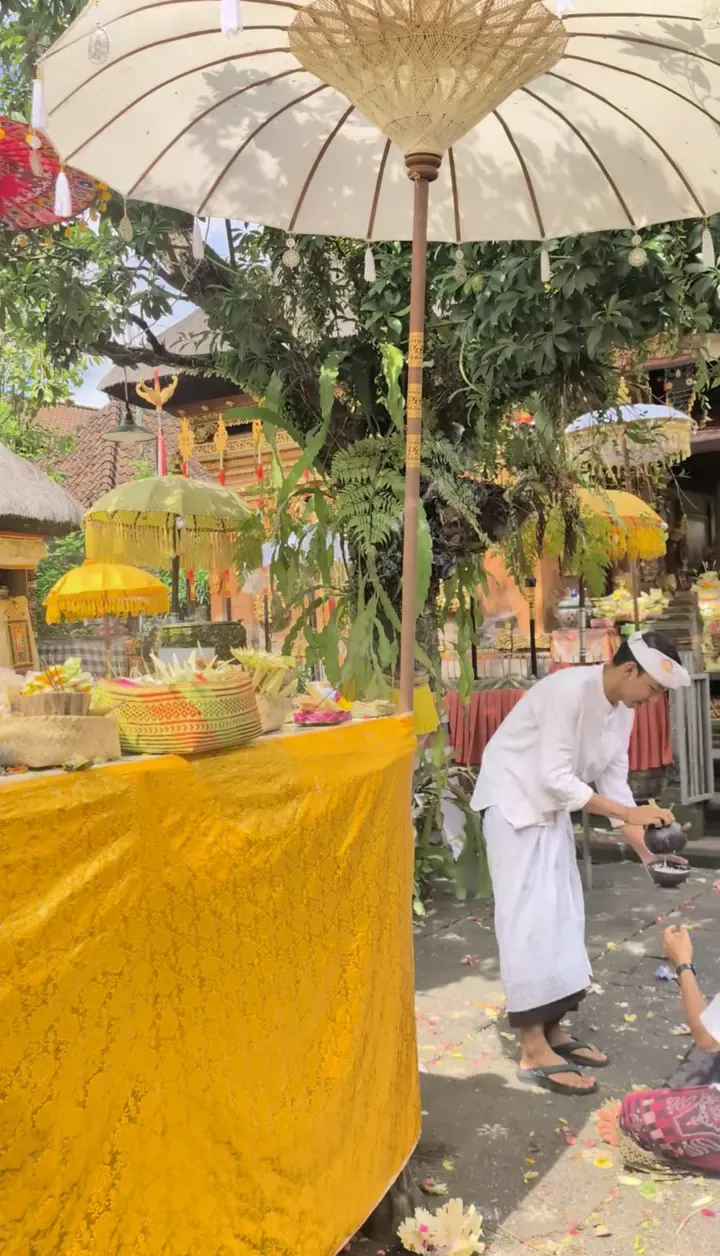
A ceremony day at Griya Gede Mas, offerings under a ceremonial umbrella

A ruwatan releases a person from a burden that the lontar show in their birth. It is larger than a melukat, with more offerings and prayers, and often a dalang, a shadow puppet master. The priest advises it only after your Lontar reading.

Advised by
The priest, from your Lontar reading
Day
Chosen from your Balinese calendar, after the reading
Held at
Griya Gede Mas, Mas, Ubud
With
Offerings, prayers and holy water, often a dalang
Length
how long a ruwatan takes

Ruwatan in Bali

Ruwatan is the word in Java and in Bali. In Bali the ceremony for a person also goes by other names.

Ruwatan
from ruwat, to set free
Bayuh oton
to ease what is heavy in a birth day
Sapuh leger
to sweep away the stain, for a birth in wuku Wayang

The priest’s advice

A ruwatan is not chosen by the guest. During your Lontar reading the priest may see a reason for one, such as:

  • A birth in wuku Wayang, above all on Tumpek Wayang
  • A birth the lontar mark as melik, with a special sensitivity
  • Misfortune that keeps returning
  • A karmic or ancestral burden

He then explains which ceremony he advises, and why.

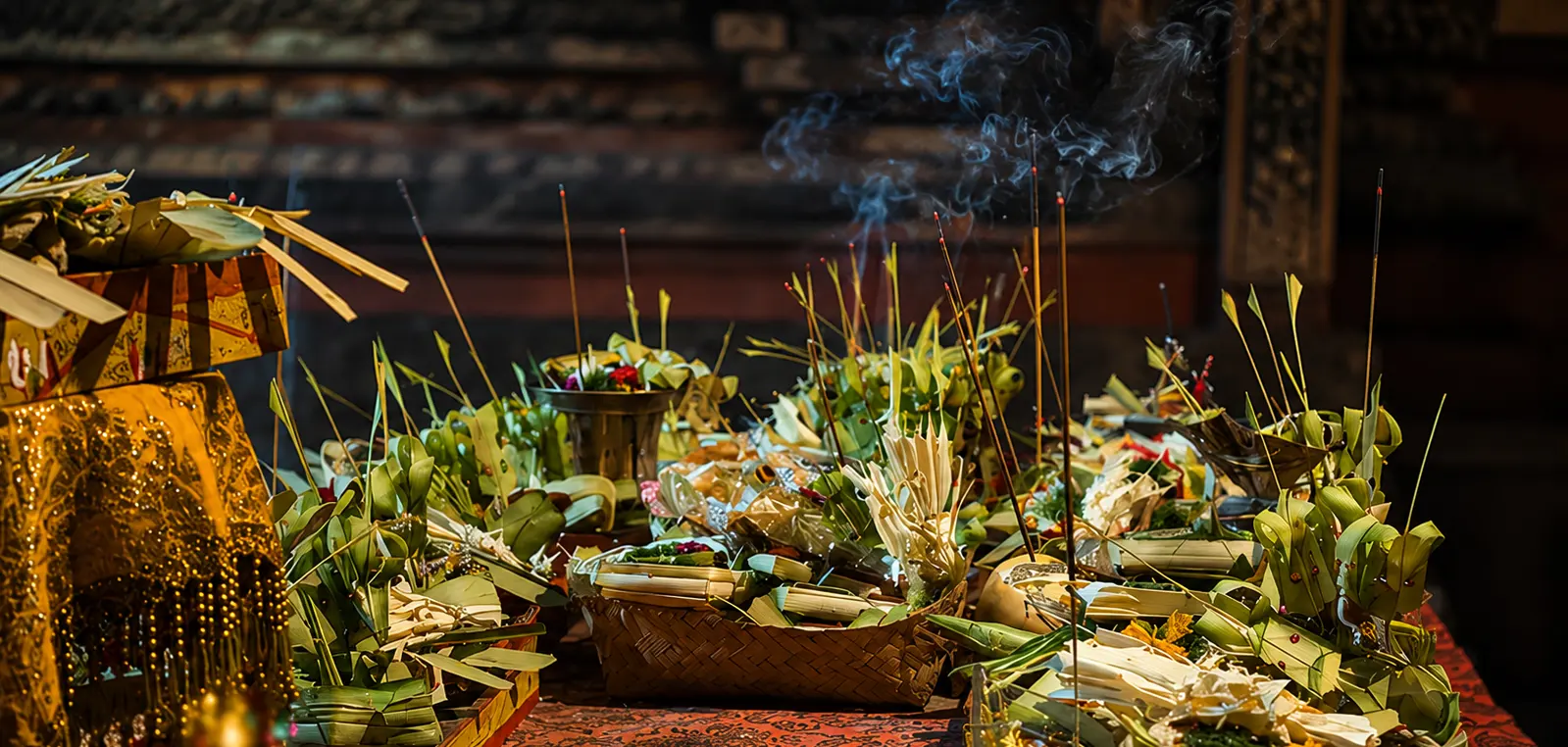
Offerings prepared for a ceremony at Griya Gede Mas

Melukat and ruwatan

The difference
MelukatThe regular cleansingRuwatanThe larger ceremony
PurposeCleansing body and mindReleasing a burden in your birth
AdvisedChosen from your Lontar readingOnly when the reading shows a reason
DayThe day of your reading, around 4 PMAnother day, chosen from your Balinese calendar
CeremonyHoly water, offerings and prayerMore offerings and prayers, holy water, often a dalang
LengthAbout 30 minuteslength

Sapuh Leger

The ruwatan for wuku Wayang

The Balinese year of 210 days has thirty weeks, the wuku. Wayang is the twenty-seventh.

The lontar tell that Siwa allowed his son Bhatara Kala to eat people born in wuku Wayang. Kala's younger brother, Rare Kumara, was born in the same wuku, and Kala hunted him. A dalang stopped Kala with a shadow play, and Kala gave up his claim.

That play is the Sapuh Leger. A person born in wuku Wayang is cleansed with it and with holy water, so that Kala's claim no longer follows them.

Many Balinese hold that everyone born in wuku Wayang needs it. Some priests say it is strictly needed only for a birth on Tumpek Wayang, the Saturday Kliwon that closes the wuku, and that for other births in the wuku a bayuh oton can be enough.

Eleven holy waters

Tradition lists eleven holy waters for a Sapuh Leger:

  • Kelebutana spring
  • Campuhanwhere two rivers meet
  • Segarathe sea
  • Pancurana water spout
  • Setrathe cemetery
  • Melantinga Melanting temple
  • Padmasarithe padmasari shrine
  • Jagatnathaa Jagatnatha temple
  • Merajanthe family temple
  • Penglukatan wayangblessed in the shadow play
  • Sulinggihfrom a high priest

The play is given by a dalang who is also a priest, an Ida Mpu Leger. how the Griya arranges the dalang

The preparation

From reading to ceremony
  1. The readingThe priest reads your otonan in the lontar.
  2. His adviceHe explains which ceremony he sees for you, and why.
  3. The dayHe chooses a good day (dewasa ayu) from your Balinese calendar.
  4. PreparationThe offerings and holy waters are prepared, and a dalang when one is needed.
  5. The ceremonyThe ruwatan is held at the Griya.

what you wear and bring, and how much notice the preparation needs

Questions

What is a ruwatan?

A Balinese and Javanese ceremony that releases a person from a burden: a heavy birth day, a karmic or ancestral burden, or misfortune that keeps returning. Ruwat means to set free.

What is a ruwatan called in Bali?

Ruwatan is used in Bali too. The ceremony for a person's birth is often called mebayuh or bayuh oton, and for a birth in wuku Wayang the sapuh leger.

How do I know if I need a ruwatan?

From your Lontar reading. The priest advises a ruwatan only when the lontar show a reason for one.

Was I born in wuku Wayang?

Your date of birth alone does not tell you; the wuku comes from the Balinese calendar. The otonan calculator on ayutyas.com shows your wuku, and the priest confirms it in your reading.

Can I book a ruwatan without a reading?

No. The reading comes first, and the priest chooses the ceremony and its day from it.

Is a ruwatan the same as a melukat?

No. A melukat is the regular cleansing on the day of your reading. A ruwatan is larger, with more offerings and prayers and often a dalang, and is held on another day.

What does it cost?

Ayutyas shares the price on WhatsApp once the priest has advised the ceremony.

Plan your visit

A ruwatan begins with a Lontar reading. Guests from abroad come through Ayutyas in Sukawati, who arranges the reading with the priest, in English. Send your dates, the number of people, and each person's full name, date of birth and, if you know it, time of birth.

Where
Griya Gede Mas, Br. Kawan, Mas, Ubud
Bookings
Ayutyas, +62 821 4400 2161
Price
Shared on WhatsApp
Griya Gede Mas, Br. Kawan, Mas, Ubud, Gianyar, Bali Get directions

Griya Gede Mas

Br. Kawan · Mas · Ubud

balipriest.com is a partnership between Griya Gede Mas and Ayutyas. Our goal is to make authentic Balinese culture and ceremonies more personal and accessible, for the benefit of all beings.

Griya Gede Mas is the home of a Brahmana priest family in Br. Kawan, Mas, Ubud. The history on this site was written by Ida Bagus Putu Eka Jaya Wibawa Putra, S.Pd., M.Ag., from the Griya's own sources.

Bookings in English: Ayutyas, Sukawati.

© 2026 balipriest.comMas, Gianyar, Bali