
Lontar ReadingYour Balinese birth day, read in the lontar manuscripts
Pewacakan Wariga
Balinese astrology
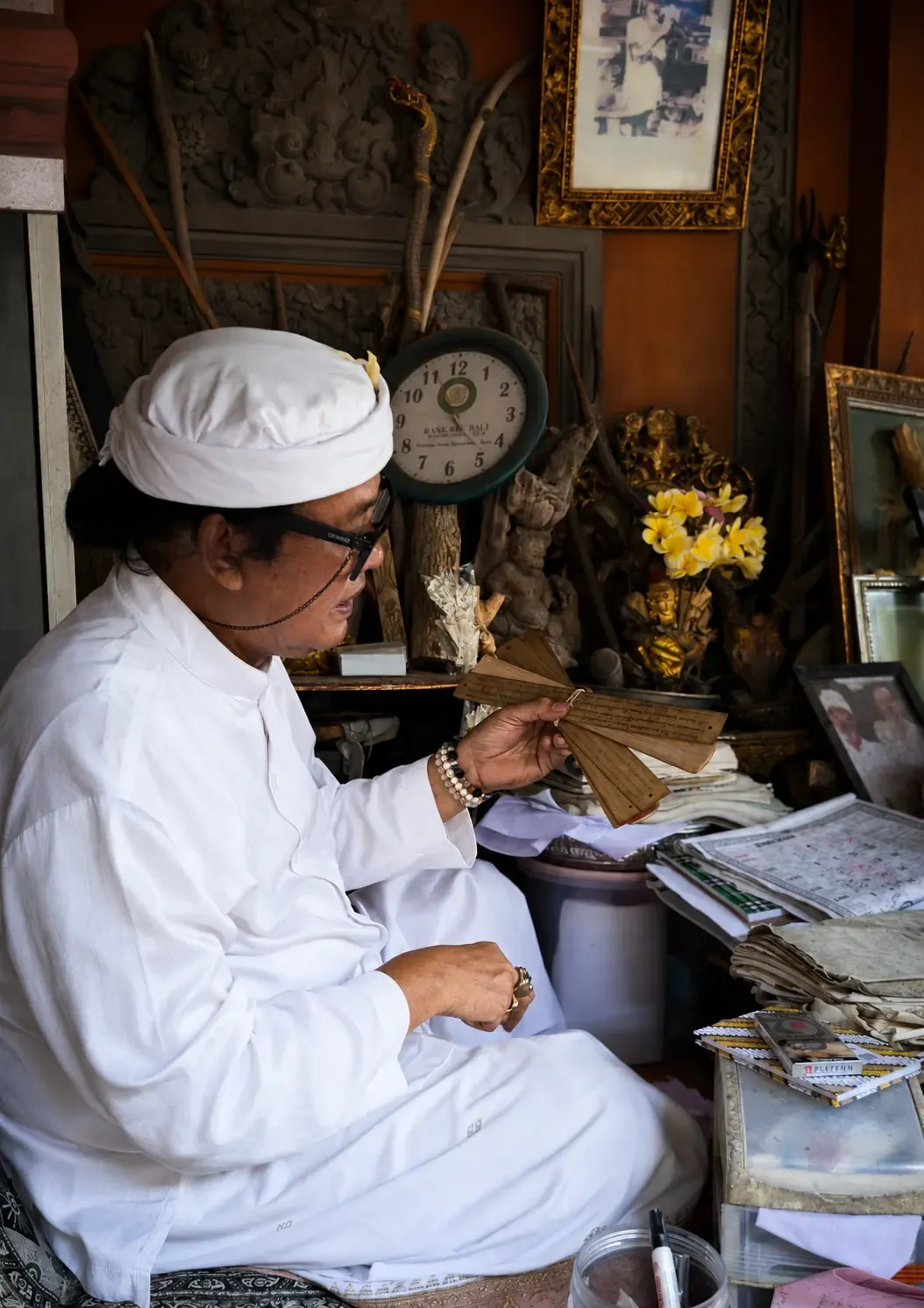
You were born on a day of the Balinese calendar, and that day has its own nature. At the Griya a priest finds your day, your otonan, in the lontar wariga and reads what is written about a person born on it. The reading closes with the lines of your hands.
- Read from
- The lontar wariga
- Followed by
- The lines of your hands
- Read by
- A priest of the Griya, in Mas, Ubud
- Language
- Balinese and Indonesian, translated into English
- Afterwards
- Receive a detailed PDF report of 6 to 8 pages
The reading of the lontar
Pewacakan warigaThis is the heart of the reading. The priest looks up your otonan in the lontar wariga and reads what they say about a person born on that day, for example:
- Your karmadatu, the seat of your karma
- Your character, and the callings that suit you
- Your guardians and their mantras
- Your lucky numbers (urip)
- Your good days and directions
- Your metals and stones
- Foods to avoid
- Parts of your body to watch over
What the lontar describe is given at birth and stays with you all your life.
Your otonan
The Balinese birth dayYour date of birth is placed in three Balinese cycles:
- 7
- Saptawarathe seven-day week
- 5
- Pancawarathe five-day week
- 30
- Wukuthirty named weeks of seven days
A Balinese day begins at sunrise. If you were born before dawn, your otonan is the day before your date of birth.
The lontar manuscripts
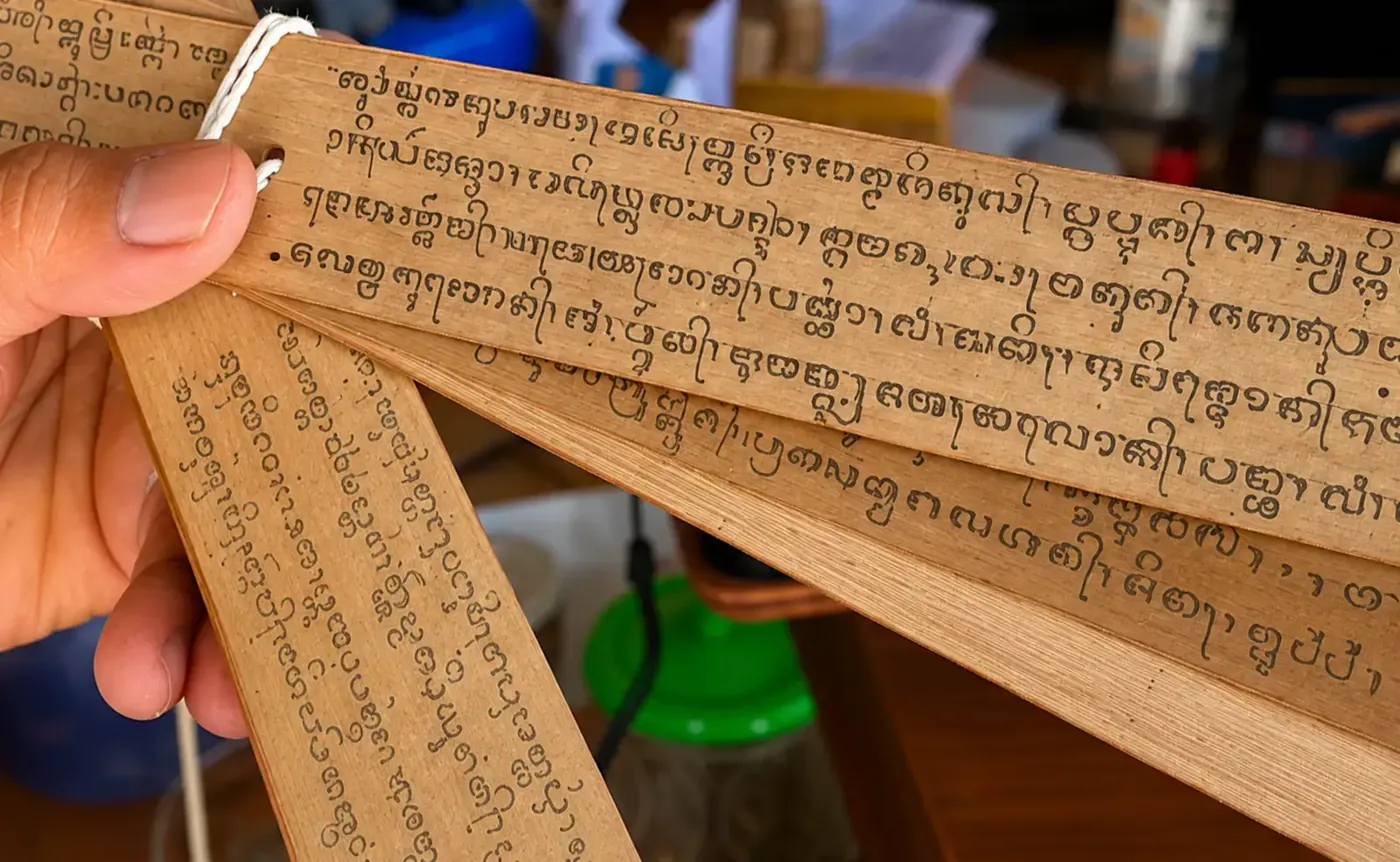
Written on palm leavesLontar are books written on the leaves of the lontar palm (Borassus flabellifer). For centuries Bali has kept its prayers, medicine, law and calendar on them. The calendar and the meaning of each day are in the lontar wariga.
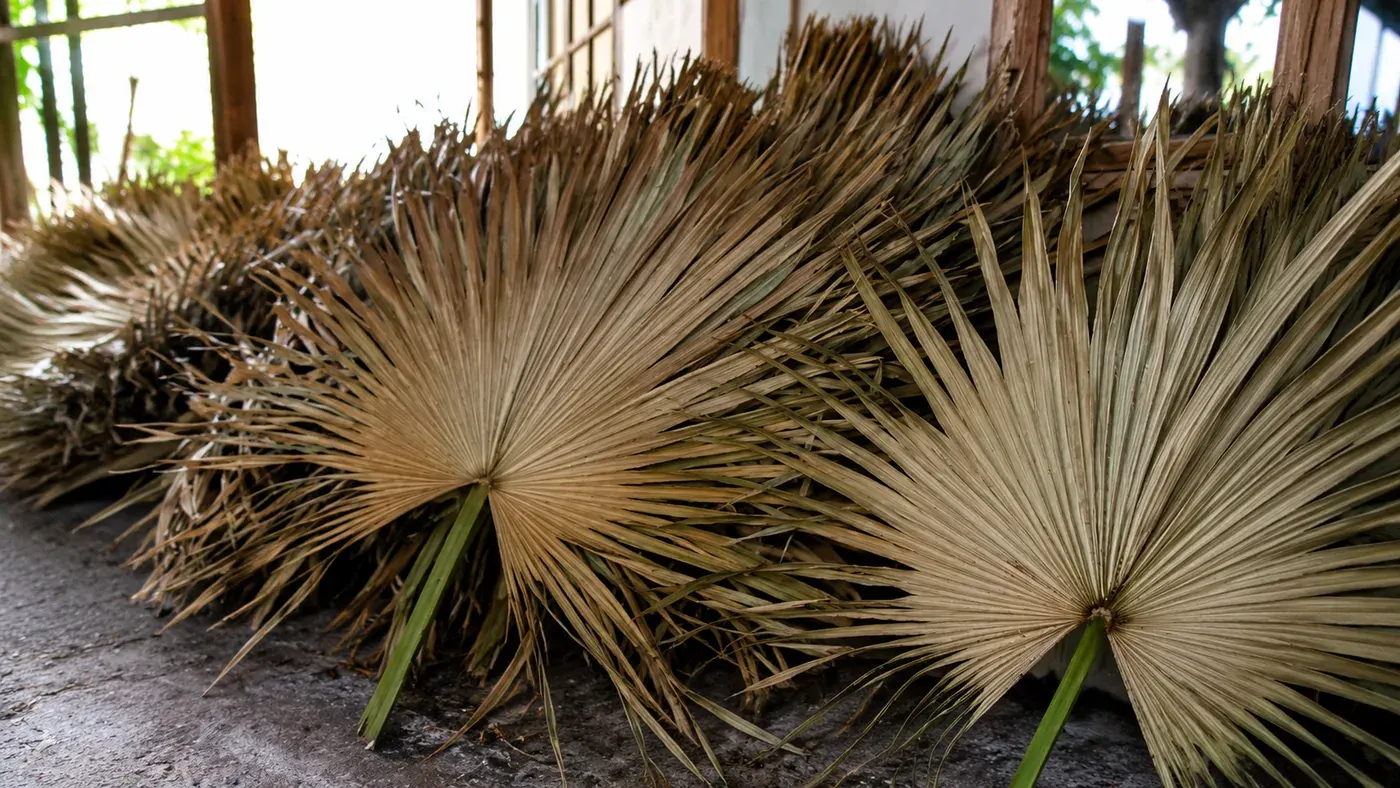
- The leafLeaves of the lontar palm are dried and cut into long strips.
- PreparingThe strips are treated with spices against insects and pressed flat.
- The writingThe letters are cut into the leaf with a small knife, the pengrupak.
- The inkSoot is rubbed into the cuts to blacken the script.
- The bookThe leaves are strung on a cord and kept between two wooden covers.
In Bali the lontar are studied after a consecration called mawinten. Reading them for a person's birth is the work of a priest.
The lines of your hands
Garis tanganThe reading closes with your palms. Their lines show where you stand in your life now, for example:
You can bring your own questions to the reading.
- Your life in phases of five to six years
- Financial well-being
- Love and children
- Your health and sleep
- Doubts on your spiritual path
Your PDF report
The reading is spoken in Balinese and Indonesian. Afterwards Ayutyas writes it down for you in English.
- What the priest read in the lontar and in your hands
- Your karmadatu, guardians, stones, lucky numbers, good days and directions
- The phases of your life
- The practices and mantras the priest gave you
- The Balinese words and their meaning
- Length
- 6 to 8 pages for one person
- Couples
- One report for the two of you, with a part on your life together. Also for families.
- Written by
- Ayutyas, sent to you as a PDF
After the reading
From the lontar the priest also sees whether a cleansing would help you, and which one.
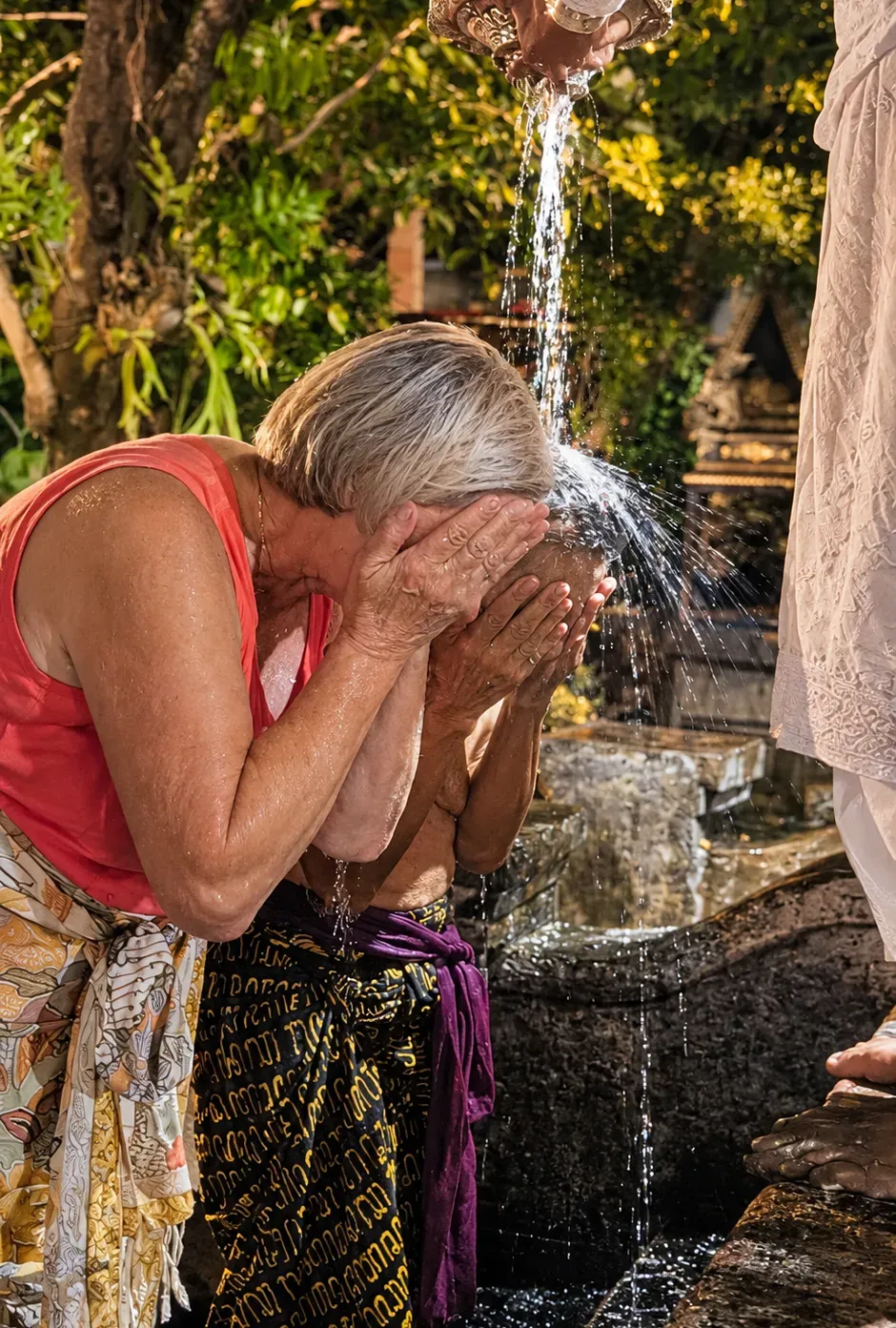
Melukat
The water purification, chosen from your reading. It can follow on the same day, usually around 4 PM.
About the melukat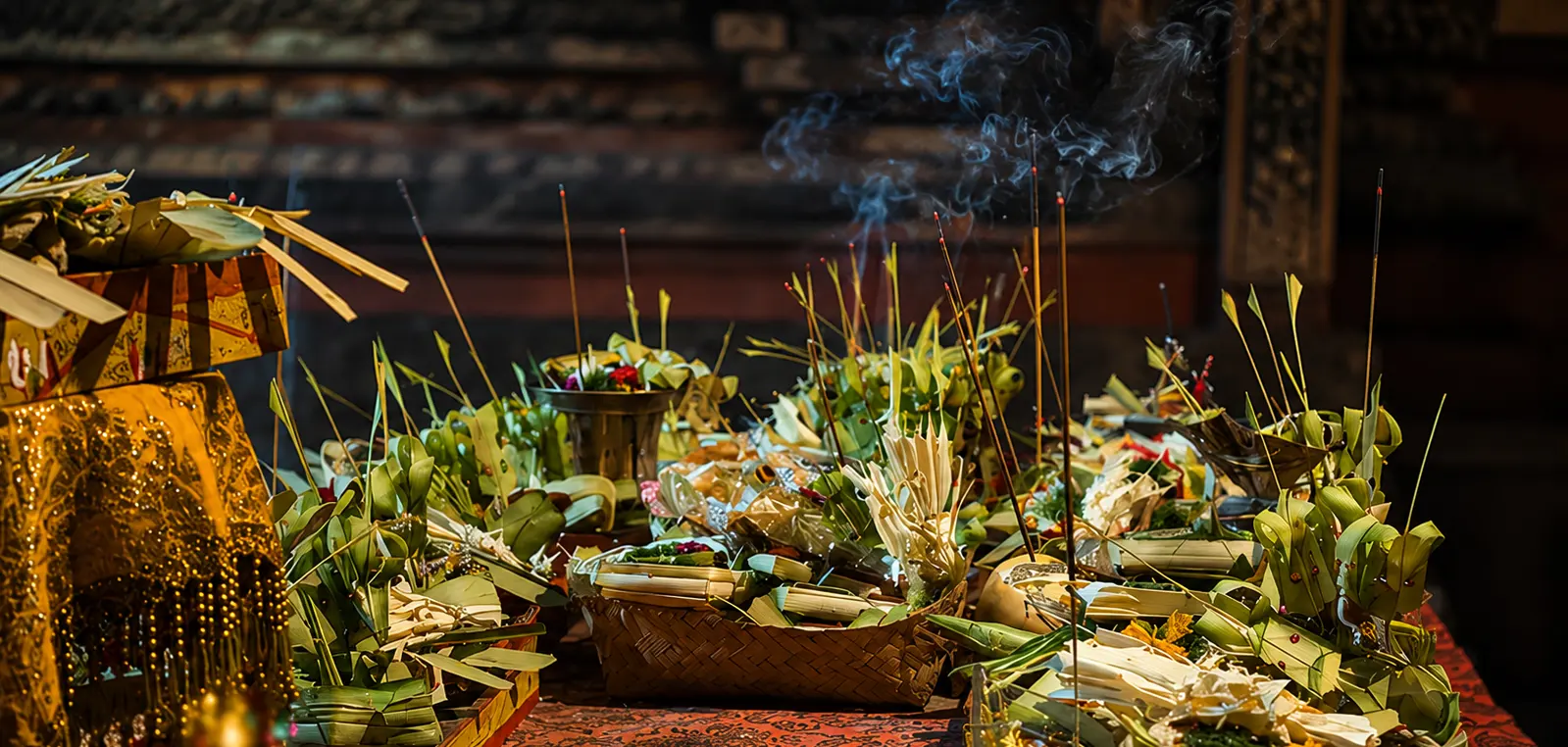
Ruwatan
A larger ceremony, advised only when the lontar show a heavy burden in your birth. It is held on another day.
About the ruwatanQuestions
Is a lontar reading the same as a palm reading?
No. The heart of the session is the lontar, read from your Balinese birth day. The reading of your hands follows at the end.
Is it the same as a palm-leaf (nadi) reading in India?
No. In a nadi reading a leaf is searched that is said to describe one person's life. The lontar wariga describe the days of the Balinese calendar, and the priest reads yours from your otonan.
What do I send before the reading?
Your full name and date of birth, and the time of birth if you know it. The priest uses them to find your otonan.
Is the reading in English?
The priest speaks Balinese and Indonesian. Ayutyas arranges an English translation and sends you the written report afterwards.
How long does it take?
Up to about an hour per person. In a couple or a group, each person receives their own reading.
Where is the reading held?
At Griya Gede Mas, the home and family temple of a Brahmana priest family in Br. Kawan, Mas, Ubud.
What does it cost?
Ayutyas shares the price on WhatsApp. It depends on how many people come and whether a melukat follows the reading.
Plan your visit
Ayutyas in Sukawati, 15 to 20 minutes from the Griya, arranges your visit, the translation and your report. Send your dates, the number of people, and each person's full name, date and time of birth.
- Where
- Griya Gede Mas, Br. Kawan, Mas, Ubud
- Bookings
- Ayutyas, +62 821 4400 2161
- Price
- Shared on WhatsApp